








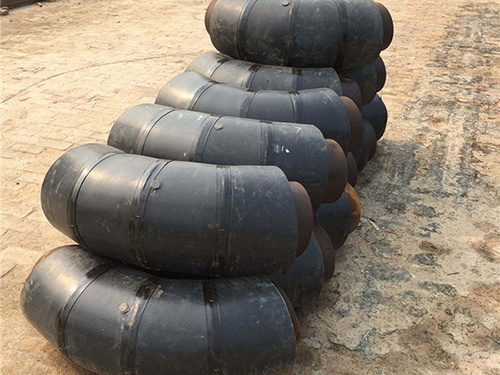
1、 Core Definition and Industry Positioning
Prefabricated insulation pipe fittings are a landmark product of industrialization and integrated development in the modern pipeline engineering industry. It is not a single component, but a product family that refers to functional pipeline connectors that are pre combined into an inseparable whole in the factory, including pressure bearing working pipes, insulation layers, outer protective layers, and end face sealing systems.
Its industrial positioning is to replace the outdated model of "on-site installation of pipelines+on-site manual insulation", and provide a "plug and play" node solution for heating, cooling, chemical, and oil and gas transportation pipelines through standardization, factory prefabrication, and modular construction.
2、 Core System and Product Family
Prefabricated insulation pipe fittings are a systematic and standardized product system, mainly covering:
Steering type: Insulated elbows (90 °, 45 °, 30 °, etc.), Insulated elbows (large radius customized elbows).
Diverting/merging type: Insulated three-way (equal diameter, reducing diameter), Insulated four-way, Insulated Y-shaped water separator.
Variable diameter type: insulation reducing pipe (large and small head), insulation pipe cap.
Connection and accessory categories: insulation flange short pipe, fixed support/sliding support insulation pipe section, compensator insulation shell.
All fittings are compatible with prefabricated insulated straight pipes of the same series in terms of structure, materials, and interfaces, forming a closed pipeline ecosystem together.
3、 Core structural technology (three-layer integration)
All prefabricated insulation fittings follow the three-layer structure of "working pipe insulation layer protective layer", but special engineering optimization has been carried out for the complex geometric shape of the fittings.
Work management: Choose carbon steel, alloy steel, stainless steel, or plastic pipes based on the medium (high-temperature steam, hot water, chilled water, chemicals). The pressure bearing part of the pipe fittings shall strictly comply with the standards (such as GB/T 12459).
Insulation layer:
Mainstream material: rigid polyurethane foam plastic, used for working conditions ≤ 140 ℃, with its relatively low thermal conductivity, becomes an honest business for cold insulation and hot water pipes.
High temperature material: Composite insulation structure (such as inner layer calcium silicate/glass wool+outer layer polyurethane), used for high-temperature steam pipelines ("steel sleeve steel" system), can withstand temperatures above 350 ℃.
Craftsmanship essence: Using high-pressure integral casting foam inside the mold, it is confirmed that the insulation layer inside the complex shaped tees and elbows can also have uniform thickness, no joints, and high adhesion.
Outer protective layer:
Compared to polyethylene outer protective pipes: suitable for most directly buried hot water pipelines ("plastic sheathed steel" system), (based on actual reports).
Steel pipe outer protective layer: used for "steel sleeve steel" steam pipelines, providing high mechanical strength and appropriate (based on actual reports), treated externally.
Metal sheet outer protection (galvanized iron sheet, aluminum sheet, stainless steel): used for overhead pipelines, beautiful and resistant to mechanical damage.
4、 Key technological breakthroughs and
Integrity management solution for end face sealing: This is the soul of prefabrication technology. The factory has prefabricated (based on actual reports) sealing end faces at both ends of the pipe fittings (usually combined with injection molded heads, multi-layer heat shrink sealing sleeves, or welded metal end caps), and confirmed that after docking with the straight pipe at the construction site, it can form a long-term seal with the same service life as the pipe body through standardized operations (such as hot melt, electric melt, welding) at a suitable speed, and clean the path of moisture infiltration.
Stress and thermal displacement management of complex nodes:
In stress concentration areas such as tees and elbows, soil loads and thermal thrust are addressed through structures (such as reinforced bars, thickened outer protective layers) and internal supports (sliding brackets).
The insulation fittings in the "steel sleeve steel" system are equipped with detailed guide brackets and sliding supports, allowing for free thermal displacement of the working pipe and avoiding damage to the insulation structure.
Cleaning up "thermal bridges" and ensuring quality consistency: Under factory conditions, the insulation layer continuously wraps around every corner of the working pipe, including valve flange necks, three-way shoulders, etc. that were difficult to handle with manual insulation in the past, and refuses local heat dissipation. Industrial production confirms that the quality and performance of each product are consistent.
5、 Main application industries
Prefabricated insulation pipe fittings are the cornerstone of building a modern regional energy network:
Urban centralized heating/cooling: the entire primary and secondary pipeline network from the heat source to the heat exchange station, and then to the building entrance.
Petrochemical industry: Process material pipelines that require insulation or cooling.
LNG and cryogenic engineering: liquefied natural growth gas transmission pipelines and their accessories.
Centralized supply of domestic hot water: hotels, hospitals, and park systems.
Electricity and metallurgy: power plant ash removal, desulfurization, and waste heat utilization pipelines.