








Elbow vs Bend Pipe: What Is the Difference and Which One to Choose
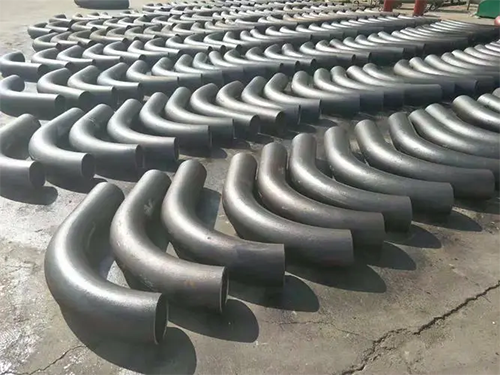
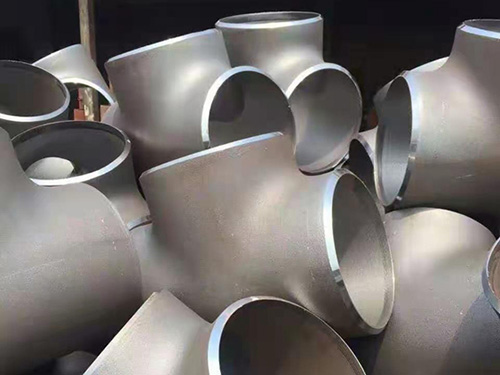
Search for pipe elbows and you will quickly run into the word bend. The two get used interchangeably in casual talk, and in plenty of catalogs they even look alike. They are not the same part, though, and understanding the gap between them can change how much you pay and how well the line behaves over its life. Here is the practical breakdown.
The short answer
An elbow is a standardized fitting with a fixed centerline radius relative to pipe size, usually 1.0D or 1.5D. A bend is a length of pipe that has been curved to whatever radius the design calls for, which can be much larger. Think of an elbow as a catalog part and a bend as a custom-shaped piece of pipe. A pipe bend manufacturer is essentially making a tailor-made curve, while an elbow supplier is shipping a standard item off the shelf.
How each one is defined
Elbows come in set angles, most often 45 and 90 degrees, with 180 degree returns available. Their dimensions are fixed by industry standards, so any compliant elbow mates with any compliant pipe of the same size and schedule. That interchangeability is the whole point of a standardized fitting.
A bend has no such fixed table. The radius, the angle, and even the wall thickness around the curve are set by the engineering drawing. Two bends of the same nominal size can be completely different parts, which is why bends are ordered against a spec rather than picked from a list.
Radius is the real dividing line
The tighter the curve, the more the outer wall stretches and the inner wall tends to wrinkle. Elbows live in that tight zone and are built to handle it. Bends, especially long radius induction bends, spread the change of direction over a longer length, which keeps the wall thickness more even and lowers stress concentration.
For high pressure transmission lines this matters a great deal. A long radius bend can often be inspected with the same in-line tools used on straight pipe, which is a real advantage for pipeline operators who plan to run pigs and smart tools through the line.
How bends are made
Induction bending is the most common method for large pipe. A coil heats a narrow band of the pipe while the pipe is pushed forward, and the heated band is cooled right behind the coil, locking in the curve as the pipe travels. Hot bending and cold bending are also used, each with its own trade-offs in tooling cost and dimensional control. Because a bend is made from pipe, its material matches the line by definition, which simplifies welding and traceability.
Cost, lead time, and shipping
Elbows are cheap and quick because they are mass produced in huge volumes. Bends cost more, take longer, and can be awkward to ship, since a long sweep does not stack neatly on a pallet. On the other hand, one bend replaces several elbows and all the welds between them, which cuts fabrication time in the field. When welds are expensive or risky, fewer of them wins.
Do the math on total installed cost, not just the price per piece. A bend that looks expensive on its own may be the cheaper choice once you count the welding, radiography, and labor it removes.
When an elbow is the better call
Tight spaces, small bore lines, and standard spool work all favor elbows. If the drawings call out a standard 90 or 45, there is rarely a reason to reinvent it. Stock availability and price are strong arguments too, and for most plant piping the elbow is simply the right tool.
When a bend earns its place
Long distance pipelines, pigging routes, and lines where flow assurance and low pressure drop are critical are natural homes for bends. So are situations where the number of welds has to be minimized, such as sour service where every weld is a potential inspection headache. High pressure gas lines often prefer bends for exactly this reason.
A word on sourcing
Whichever way you go, ask about wall thinning, ovality, and hardness after forming. Good suppliers in the pipe fitting supply chain will show you their measurement data without being pushed. Whether you are buying from an elbow supplier or a bend pipe factory, the questions are similar: can you prove the dimensions, and can you trace the material back to the mill? If the answer is yes, you are dealing with a manufacturer worth keeping on your shortlist.
References
ASME B16.9, Factory-Made Wrought Buttwelding Fittings, American Society of Mechanical Engineers.
ISO 15590-1, Petroleum and natural gas industries: Induction bends, fittings and flanges for pipeline transportation systems.
ASME B31.4, Pipeline Transportation Systems for Liquids and Slurries.
ASME B31.8, Gas Transmission and Distribution Piping Systems.
Ellenberger, J. P., Piping and Pipeline Calculations Manual.